


By Wesley Edmonds, Director of Workplace, OFS
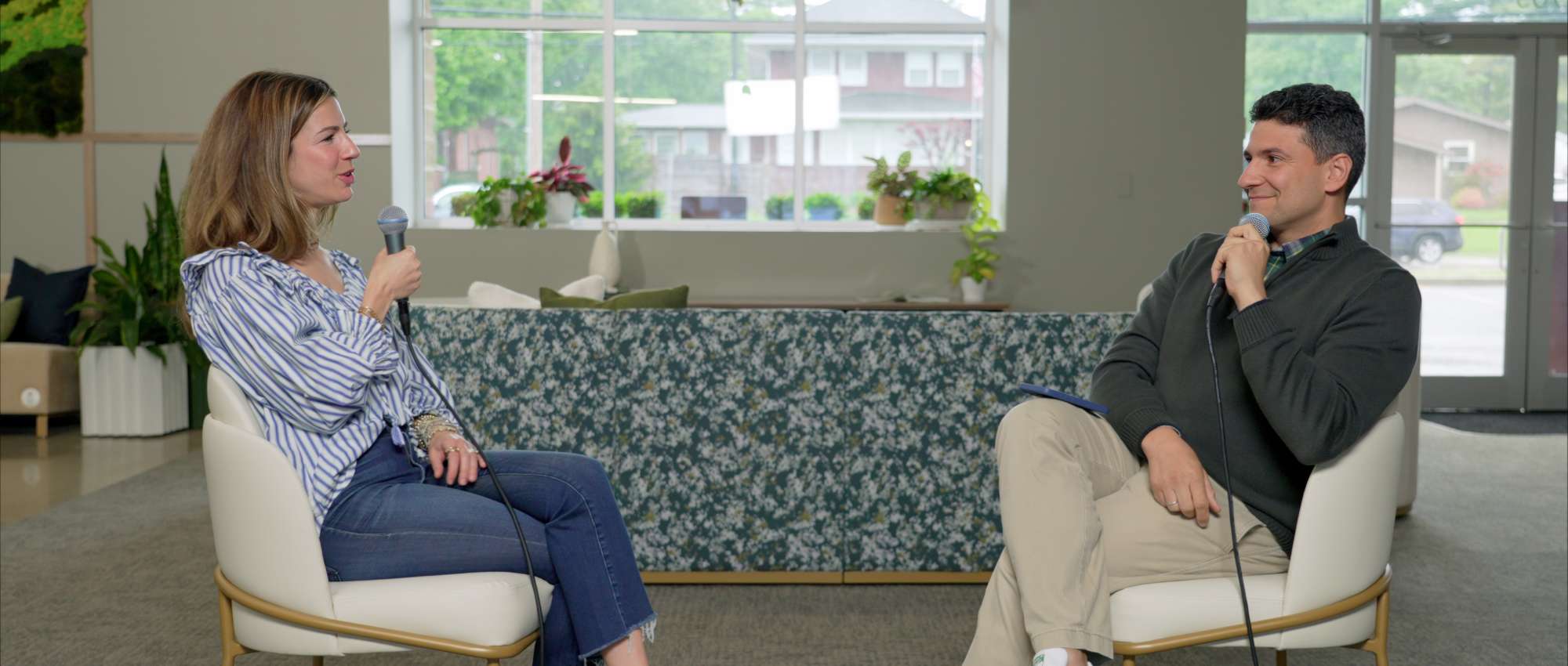
We’ve been talking a lot about flex spaces, and if you read our previous insights article, you know why they’re essential. Now, I want to bring you into conversations with leaders who are not just participating in flex work, they’re helping define what it’s becoming.
The voices shaping the next chapter of flex workspaces
Here’s who joined me:
- Caroline Hecht, Head of Global Partnerships at Preferred Office Network
- Hector Kolonas, Founder of This Week in Coworking
- Mara Hauser, Co-Founder of Workplace Studio & 25 North
If you want to hear their full stories, I encourage you to dive into each of their episodes featured on Imagine a Place. Here, I want to connect the dots from those conversations and explain how flex is moving from trend to tangible impact.
Why flex is about time, not just space
Caroline said something that stuck with me: “Our product is time.”
She explains that at Preferred Office Network, they streamline hundreds of locations into a single relationship for enterprises.
But what they’re really offering isn’t just administrative simplicity. It’s freedom.
The ability for companies to focus on people, and not paperwork.
As she put it, “We say yes to whatever the client needs.”
That mindset shifts flex from being a real estate alternative to being a strategic tool. Flex is becoming the antidote to corporate rigidity, giving enterprises back time and choice.
Flex brings work to people, not the other way around
During my conversation with Hector, he expanded on that idea in a way that reframed it for me.
“Flex isn’t a format; it’s human-centered.”
What does that mean in practice?
He shared an example of coworking spaces in train stations. Not as a novelty, but as a signal. Flex brings opportunity to where people naturally are.
It adapts to their routines instead of forcing them to reorganize their lives around a single fixed location. Whether it’s location, hybrid consistency, or autonomy, flex reduces friction.
He asked me, “As automation grows, how do we keep the human side of work?”
That’s the mindset behind flex. Designing systems and spaces that prioritize human experience, even as technology accelerates everything around us.
Flex spaces must be intentional
Mara wears both design and operator hats, and she’s clear: flex spaces must run like hospitality, intentional, seamless, and ready for change.
She said, “What makes them sticky is community,” but that community doesn’t happen by accident.
It’s supported by design decisions that make operations smoother and experiences better. Furniture on casters so layouts can shift. Thoughtful acoustics for Zoom calls. Power where people naturally sit.
Flex operators don’t have the luxury of ignoring those details. Their members actively choose to be there and invest in the experience. That means the space has to earn its keep daily.
Her advice? Even corporate workplaces should take a page from flex. Design for adaptability. Design for people who don’t all work the same way.
Flex as an infrastructure, not an experiment
Across all three conversations, one thing became clear: flex is maturing.
It’s no longer an add-on or a temporary solution. It’s becoming embedded in how organizations structure their workplace strategy.
For enterprises, flex is a portfolio tool that supports distributed teams without long-term rigidity. For operators, it demands operational precision, not just good design. For designers, it reinforces that adaptability and experience must work together.
Flex isn’t a reaction to change anymore, it’s a framework for navigating it.
If we’re designing workplaces without accounting for that reality, we’re not just missing a trend. We’re missing how work is actively being restructured around people, mobility, and choice.