


By Maria VanDeman, Director of Design Strategy, Host of Imagine a Place podcast and Laura Misel, National Account Manager, Healthcare
Some of the most important conversations in our industry happen when we bring people with different experiences and expertise into the same room.
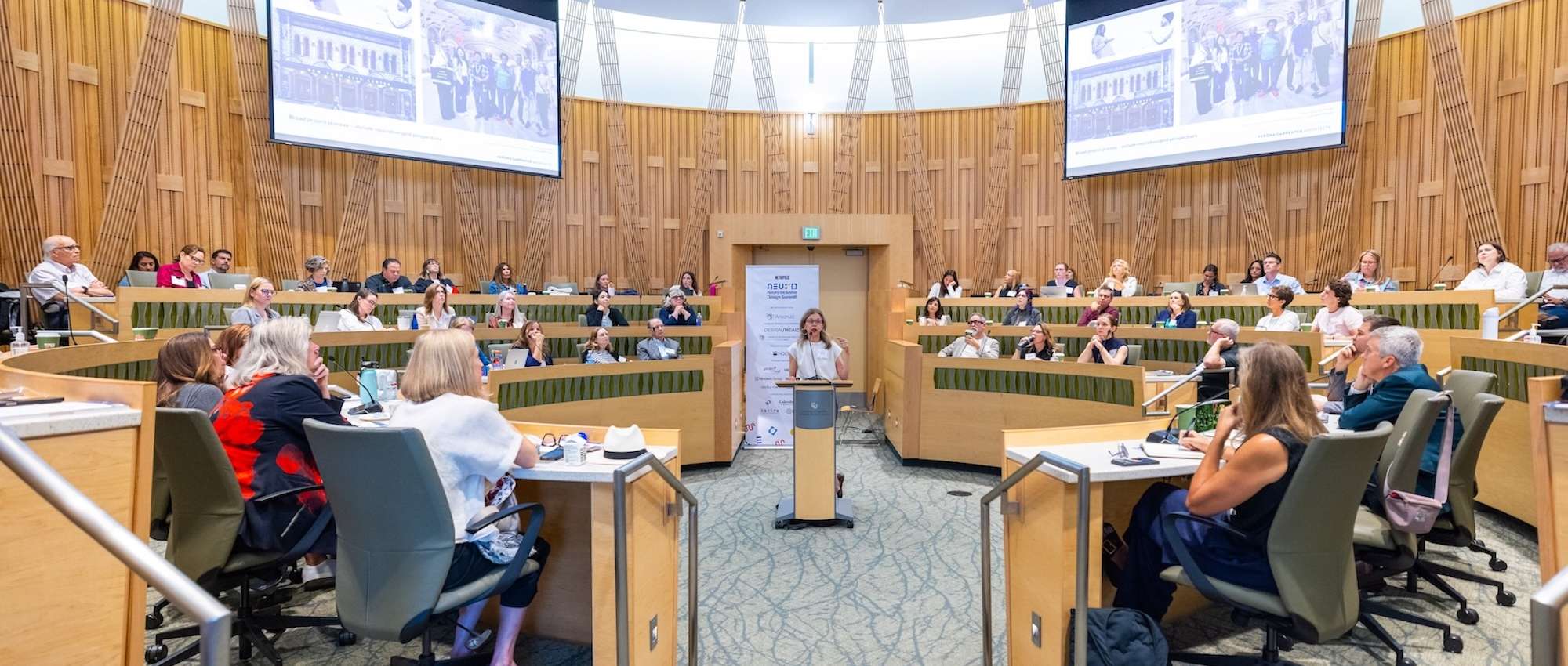
That was certainly true at the inaugural METROPOLIS Neuroinclusive Design Summit at the University of Colorado Anschutz Medical Campus in Denver, Colorado. Architects and designers joined healthcare clinicians, researchers, and neurodivergent voices to explore how the built environment affects the way people experience the world.
As an industry, we talk often about creating spaces for people. But conversations like this challenge us to go deeper. Which people are we designing for? What do they need? And how do we make sure we're listening?
We took away four ideas that challenged and expanded the way we think about neuroinclusive design.
1. Design for the individual, not the diagnosis.
There is no single way to design for neuroinclusion because there is no single neurodivergent experience. People experience sensory input differently, communicate differently, and need different levels of support. Those needs can also change based on age, activity, environment, or even the moment. Something that feels comfortable in the morning may feel overwhelming later in the day.
That is why neuroinclusive design cannot simply mean adding a sensory room and checking a box. Instead, we must think about creating a range of experiences throughout an environment. Some people may seek stimulation while others need calm. Someone may want connection at one moment and privacy the next. Lighting, sound, movement, enclosure, texture, and even where we choose to sit can influence how comfortable and supported we feel.
AJ Paron, EVP and Design Futurist of Sandow, shared The ASD Design Matrix, which is a framework for thinking about this complexity. Rather than treating autism as a checklist to follow, it considers the individual as a matrix alongside factors such as personal traits, age, space types, design priorities, and other factors such as social elements. It challenges designers to think about the complexities of an individual’s experience as they move through a space.
The larger lesson reaches beyond autism because there is no one-size-fits-all human experience. Designing for the individual means understanding the complexities of every individual, and creating enough variety, flexibility, and choice for more people to find what works for them.


2. Design with people, not just for them.
Understanding that everyone experiences space differently leads to another important responsibility: we cannot assume we know what someone else needs.
Neuroinclusive design requires bringing the people who will actually experience an environment into the design process and finding meaningful ways for them to participate. That participation will not look the same for everyone. At the summit, perspectives were shared about ways to engage nonverbal individuals through visual tools and picture boards, giving them ways to communicate preferences without relying on words.
It also means expanding our understanding of who the “user” really is. In addition to the individuals with a disability or neurodivergent experience, this may also include an individual’s support system such as caregivers, family, or clinicians. Listening to a person’s broader circle of influence can uncover needs and challenges that may never become visible through a traditional design process.
Hala El Khorazaty, Senior Interior Project Designer of Perkins & Will presented a case study of their work at Nicklaus Children's Hospital in Miami, which incorporated spaces tailored to children with sensory and neurodiverse needs to help reduce surgery-related anxiety.
The many lessons shared by a variety of speakers and participants were about including the people closest to the experience in creating it. If we want to call our work human-centered, the humans themselves need a voice.
3. Neuroinclusive design is a human rights conversation.
One statement from the summit reframed the conversation around inclusion: “Homeostasis is a civil right.”
Homeostasis refers to our ability to reach a state of internal balance, yet our surroundings are constantly influencing that balance, often before we consciously recognize it. Light, sound, pattern, temperature, movement, visual clutter, proximity to others, and countless other sensory inputs can help regulate our nervous systems or make it harder for us to feel comfortable and focused.
Everyone deserves environments that support their ability to feel safe, comfortable, and regulated enough to participate in everyday life. Our spaces influence how easily people can work, learn, heal, and connect. For someone who experiences their surroundings more intensely, the design of those spaces can create very real barriers to participation.
As designers, we have a responsibility to create environments that account for the diversity of people who experience them. Choice, control, flexibility, and opportunities for sensory regulation can give more people what they need to comfortably participate and thrive. Everyone deserves that opportunity, and that is what makes neuroinclusive design a human rights conversation.
4. Sharing what we learn is part of the responsibility.
One of the most valuable parts of the summit was simply being in the room, learning from the passion and expertise around us, and leaving inspired to carry the conversation forward. Perspectives spanned design and architecture, healthcare and medical sciences, research and manufacturing, advocacy and lived experience, giving us a broader view of the challenges and opportunities surrounding access and inclusion.
No single discipline, firm, or manufacturer has all the answers. We make greater progress when we learn from one another and share what we know. Kay Sargent, Senior Principal and Director of Thought Leadership, Interiors at HOK and a leading voice in neuroinclusive design, described this kind of collaboration and knowledge sharing as a “moral imperative” if we are serious about creating environments where people can thrive.
For us at OFS and Carolina, part of that responsibility is asking how furniture can give people more choice and control over their environment. The OFS Room Collection by ROOM collection, for example, has earned the Certified Autism Resource (CAR) designation by IBCCES, recognizing its ability to support autistic and sensory-sensitive individuals through greater environmental control. Across our portfolio, we can continue exploring how privacy, flexibility, sensory experience, and choice can better support individual needs.
A product alone cannot make a space neuroinclusive, and no single design strategy can meet every person's needs. Progress comes from bringing people, research, design, and products together to create environments with more choice, understanding, and room for individual experience. Gatherings like this summit help move that work forward by giving us new perspectives to learn, share, and carry back into our own areas of influence.
Designing for difference
We left Denver with pages of notes, new connections, and even more excitement about what is possible when people come together with a shared desire to design for good. Events like this remind us that learning from one another can lead to real change in the spaces we create and the people who experience them.
Design for the individual. Bring people into the process. Recognize the role our environments play in helping people feel regulated and able to thrive. And keep sharing what we learn.
The more we understand how differently people experience the world, the better equipped we are to design spaces that give all of us a place to feel supported, included, and truly belong.


Additional neuroinclusive design resources:
CEU: Neuroinclusive design: Foundations for the built environment
Image a Place Podcast: People care about people: What neurodiversity teaches us about great design
Relevant product: The Room Collection, Kaleid Workstations